



The Five Stages Of Leadership Development
When it comes to your Community Group, today’s co-leaders are tomorrow’s leaders. If you’ve identified co-leaders with the right character, chemistry, and commitment, you’re well on your way to making sure a new generation will experience the life change together that your Community Group has enjoyed. As you develop your co-leaders to take the next step in their own leadership journey, keep in mind these five key stages:
You lead, they watch, then talk together. After you’ve identified a co-leader couple, ask them to simply observe for a while. Let them watch while you lead the weekly group discussion. Take them along on a hospital visit, or invite them to coffee with another couple in your group. Be sure they attend Community Group leader trainings and have access to group leader resources. Just give them opportunities to see leadership in action. And then, talk with them about what they noticed. Let them give you feedback, ask questions, and even offer constructive criticism.
You lead, they help, then talk together. Begin to share leadership roles with your co-leaders. Start slowly, but be intentional. Ask your co-leaders to provide the meal for one of your weekly gatherings, to come up with a creative ice-breaker for your group, or even help you organize a group service project. During group interactions, ask them to give their insights, or to respond to a specific question or comment from someone else in the group. After opportunities like these, talk with them about what went well, what might have been done differently, and how they feel about their role as co-leaders.
They lead, you help, then talk together. As your co-leaders grow in their abilities and confidence, your role will also begin to shift. Instead of leading your group, you’ll need to begin to hand over the reigns to your co-leaders. When a counseling situation comes up in your group, ask your co-leaders to spearhead the conversations. Let your co-leaders host, provide snacks, and facilitate the discussion during your weekly gatherings. Instead of asking them to help you, start asking them, “How can we help you lead right now?”
They lead, you watch, then talk together. Toward the end of your Community Group season, once you have a plan to multiply your group, it’s time to step back and watch your co-leaders as they shepherd the group. Watch them as they facilitate the group meetings and monitoring its health. Let them encourage group participants to take their next step of growth. Give them permission to make decisions about what your group is studying. Now, when you talk together about the group, it’s no longer your group - it’s their group!
Finally, they lead, they find someone else to watch, then they talk together. As the group plans to multiply, be sure your co-leaders are committed to identifying and developing a new set of co-leaders as their new group begins and the cycle continues.
One more reminder. Something happens inside each of us when someone that we respect says, “I see in you great potential!” Speak that kind of confidence into your co-leaders on a regular basis at every stage of this process. You may be surprised at quickly they grow when they know you believe in them.


Why You Need A Co-Leader
As a Community Group leader, you have a built-in opportunity for discipleship with your co-leaders. Developing the next generation of leaders may become one of the greatest joys of your life. As you spend time with your co-leaders, you’ll grow together, and your group will benefit too.
Here are five reasons why you shouldn’t be leading without a co-leader couple.
https://youtu.be/sM9inUHzZU4

How To Be A Sending Group
Helping more people be more like Jesus is a multiplication vision. As a church, we plant other churches because we want more people to be introduced to Jesus in their own culture and community. As individuals, we’re not just called to be more like Jesus ourselves, but to show others the way to be more like Jesus too. So, our Community Groups multiply because it’s a natural part of our corporate and personal disciple-making vision. Creating a new Community Group should be a like a missionary “sending” experience. It is the disciple-making mechanism that has exponential potential for reaching our own community and the world.
There are several ways that your current Community Group can be a sending group:
Launch a new group. In this model, one couple from the parent group starts a new group. Either the current leaders stay with the group while the co-leaders form an entirely new group, or the co-leaders stay with the current group while the leaders launch out to form a new group. Talk and pray with your co-leaders about this option. Would they prefer to stay with the current group, or do you think they would be more effective starting their own group from scratch?
Plant a new group. In the same way as a new church would be planted with a core leadership team, a new Community Group could be planted out of your current group. In this model, the leaders or co-leaders would invite two or three other couples or individuals to be part of the core that plants a new Community Group. If you have a group with several mature Christ-followers that could form the foundation of a new missional group, one that would be naturally evangelistic, maybe this is the model to pursue.
Double the current group. Either the leaders or the co-leaders branch out, and the current group is strategically distributed between them to form two new groups of equal size. Of course, both groups then invite new people to join them, and the number of people originally in a Community Group doubles. If you choose to multiply through this model, be sure to prayerfully and sensitively form the two new groups. Distribute people into groups based on their chemistry with each other, their spiritual giftedness, their stage of life, and where they live. Consider talking privately with couples and individuals in your group to get their feedback on which group they feel would be best for them.
Whichever model you choose, help your group see how multiplying, although sometimes not comfortable, is the best way to create space for more people to experience discipleship and growth.

Your First Meeting With Your Co-Leader
If you’ve identified a potential co-leader couple, and they’ve agreed to join you in this leadership journey, you’ve already taken a huge step in helping more people be more like Jesus! Your relationship with your co-leaders will be key to the way your Community Group experiences life change together. But what does that first meeting with your co-leaders look like? Here are five areas you’ll want to cover in that first official conversation with your new co-leaders.
https://youtu.be/S75IKpbL-jo

Community Group Leader Agreement
Community Groups are an integral part of what we do as Saylorville Church. We believe that sustained life change occurs as we are growing in a relationship with Christ and with others who are seeking this same goal. Community Groups provide people with the opportunity to share life, pursue change, and grow together. Our Community Group leaders play a vital role in creating environments that help more people be more like Jesus.
Paul taught the Corinthians that some plant the seeds, others water them, but God makes them grow (1 Corinthians 3:6). Group leaders have the privilege of creating environments in which seeds of faith are planted and watered in the lives of those they lead, while trusting God with the growth. Our leaders are truly on the front lines of watching God work in the lives of individuals and in the life of our church.
Leaders are successful when they are personally growing in their intimacy with God, community with insiders, and influence with outsiders (The 3 Vital Relationships) and are leading their groups in such a way as to encourage the group members’ growth in these three relationships as well. Community Group leaders are supported by the Discipleship Pastor, Ministry Directors, and other staff at Saylorville.
Since our Community Group leaders play such an important role, we take great care when enlisting them. Please read through the information below to better understand the role of a leader, the requirements, and the responsibilities of a healthy Community Group leader.
Role of a Community Group Leader (What is the priority of a Community Group leader?):
The Community Group leader’s main role is to shepherd the group by creating an environment that encourages people to experience life change together.
Requirements of a Group Leader (Who can be a Community Group leader?):
- Must be a saved and baptized member of Saylorville Church in good standing.
- Must recognize the Bible as the authority for their lives.
- Must be an example to others in attendance, giving, serving, and leading.
- Must have participated in a Community Group at Saylorville Church for at least one season.
- Must be willing to lead through at least one group life cycle (From new group to multiplication).
Responsibilities of a Group Leader (What must a Community Group leader do?):
- Lead the group by facilitating the meeting and monitoring its health.
- Encourage group participants to continually take their next step of growth.
- Guide decisions relating to the Group Agreement and curriculum.
- Attend leader training meetings, read weekly emails, and meet with the Discipleship Pastor or Ministry Director for one-on-one discussions.
- Communicate updated Community Group information to the Discipleship Pastor.
Restoring The Joy Of Marriage
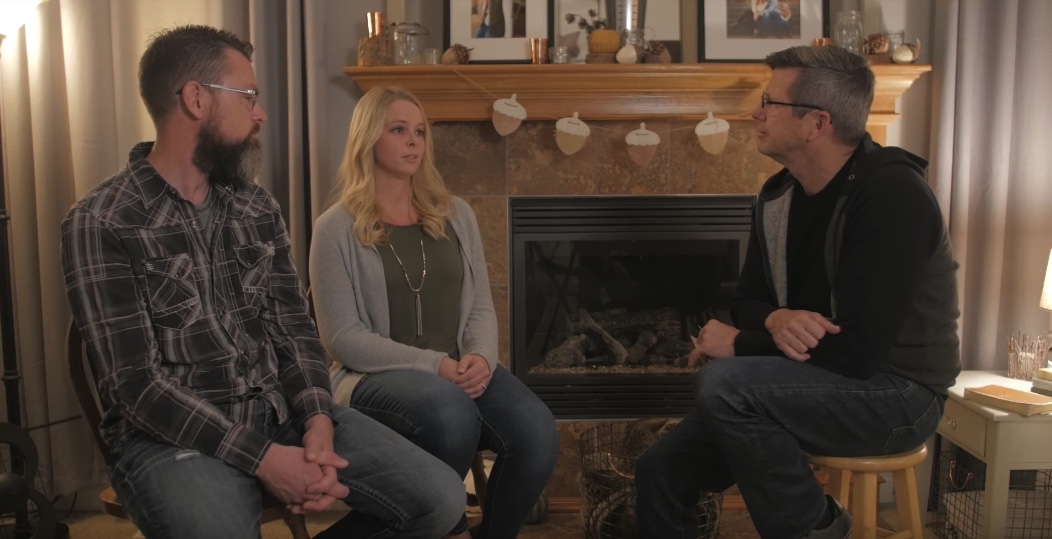
As a Cell Group leader, you'll have the privilege of walking with married couples through some of the best and worst of times. We created this resource to help you walk through some difficult marriage conversations with your group. The discussion guide is based on a Saylorville Story that God used in our church to convict of sin, spark open conversations, and heal broken marriages. It’s a story of pain and restoration, failure and forgiveness, and hope for couples everywhere. The uniqueness of this story isn’t that it happened, it’s how the couple responded to what happened. If you have married couples in your group, consider using this resource, "Restoring the Joy of Marriage", to provide some preventative marriage maintenance together.
Get the discussion guide here.
Watch the Saylorville Story video here.

Two:22 Discipleship Plan
The Two:22 Discipleship Plan is a tool that will help guide two people in a series of spiritual conversations. These Bible-focused discussions are designed to help both people grow in their intimacy with God, their community with other believers, and their influence with those who don’t yet know Jesus. Becoming more like Jesus is a lifelong journey - one that includes many people, experiences, and tools that God uses to shape His children. Two:22 is simply one part of that journey.
Click here to download the full Two:22 Discipleship Plan.

Transparency as a Leader
Are you a transparent leader? How transparent should you be with your Community Group? Terry Powell writes, "Something is transparent when you can see through it. Similarly, a person is transparent when he is not pretentious—when she discloses her setbacks as well as victories. Such a person is called "real" because he does not mask what is going on inside. With discretion, her prayer requests are specific and honest. He seeks support and counsel by telling others in the group when he is hurting or in need of help. She shares anecdotes from her pilgrimage as a Christian in order to assist newer believers. He explains how a Bible truth encourages or challenges him. Put simply, you can see inside, or through, a transparent person."
For more of this excellent article by Terry Powell, click here.

How To Respond To Confession In Your Group
When someone confesses sin in your Community Group, it’s a good thing! They are acting as “children of the light” as Ephesians 5 commands us to do, exposing their sin, and seeking help and restoration. James 5:16 commands us to “confess your sins to one another, that you might be healed.” It can be a powerful thing when someone who has been living in the shadows brings their sin to the light, but sometimes others can be left wondering what their response should be. As leaders, it will be up to you to set a godly precedent when this type of situation occurs. Don’t worry! The Bible gives us some clear guidelines in this area. Below are some thoughts of how you should respond when someone confesses sin in your group.
Remind them of the promises of God. Galatians 6:2 commands us to “bear one another’s burdens and so fulfill the law of Christ.” When someone confesses sin, we must come around them and remind them of the promises of God, and do what we can to help them overcome the sin that they have confessed. A great way to start is by praying for the person. Ask that God might bring victory over their sin and restore them to himself and anyone else they may have wronged. Remind the person of the truth in 1 John 1:9 which says, "If we confess our sins, he is faithful and just and will forgive us our sins and purify us from all unrighteousness.”
Extend Forgiveness. If the offense is towards you or the group specifically, forgive the person as Ephesians 4:32 commands. We are to forgive as we have been forgiven by Christ, without continuing to hold the offense against the person any more.
Call them to true repentance. Remember that just because a person confesses sin, this doesn’t mean they have truly repented of it. Confession means to “say the same thing” as God does regarding our sin, but repentance is to do a complete 180 degree turn from it and continue in a new trajectory. Lovingly call the person to produce “fruit in keeping with repentance” as Matthew 3:8 commands. This “fruit in keeping with repentance” is evidence that they have set a new trajectory in life. They should be obviously fighting against the sin and seeking to form new habits that spur them on towards godliness.
Help them with a plan. Accountability may be necessary in the person’s life, and one of the reasons for confession is to surround yourself with others who can help you overcome sin. If the person doesn’t seem to have much of a plan for overcoming this sin, or if their plans don’t seem to be working well, sit down with the person one on one to discuss a biblical plan of attack. If you are unsure of how the Bible speaks to this person’s problems, include a wise counselor who can help you put together a plan.

Membership Class Info
At Saylorville, we believe being a member of the local church is very important. It’s about taking ownership. Becoming a member means that you are willing to identify yourself with us – that you want to join us in our vision of making more people more like Jesus in the Des Moines metro and around the world.
Being a member of any community comes with certain responsibilities. We are a family that is intentional about spending time together, serving each other, and caring deeply for each other. Our common purpose motivates us to give of what we’ve been given so that others may benefit as we have.
Membership also has its privileges. While we encourage everyone attending our church to jump right in and begin getting connected, many opportunities are only available to members. Likewise, major decisions that impact the direction of the church are made by our members because they have a great stake in our common future.
To find out more about membership at Saylorville, sign up to attend our next Membership Class here.

Baptism And Your Group
We believe that baptism is in outward act that reveals an inward fact. It's an external expression of an internal reality. Believers' baptism is a step of obedience for the Christ-follower. If you have group members that aren't baptized, here are two steps you can take right away to encourage them:
- Watch Pastor Pat's teaching on baptism in this excellent message from Matthew 28:19-20.
- Attend the next Baptism Class at Saylorville Church. Check here for details.
Serving In Rise Up
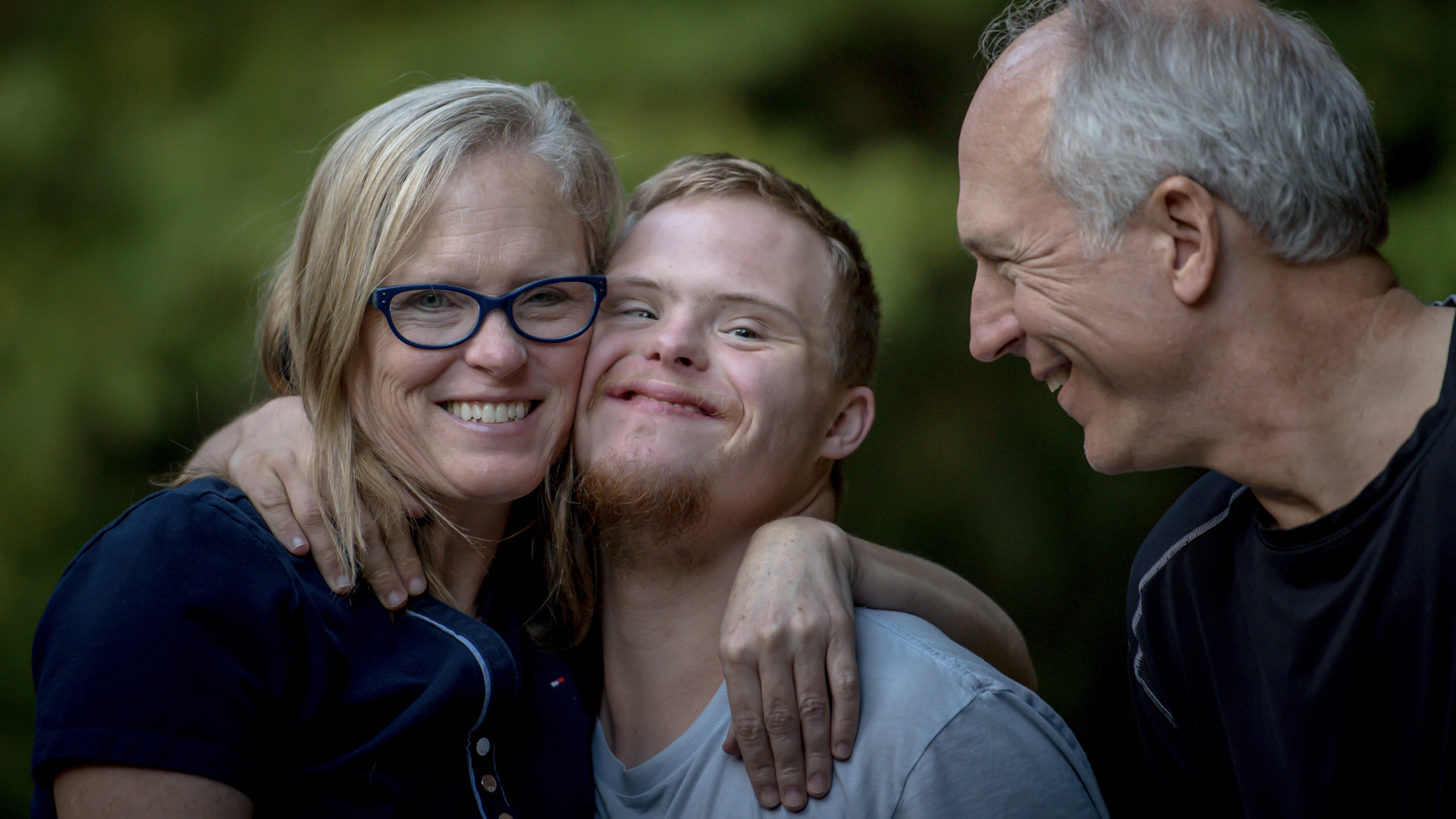
Looking for a great way to serve as a Community Group this season? Our Rise Up ministry provides an incredible opportunity to live out our group essential of service - putting the needs of others before our own.
Rise Up is a Saylorville ministry to the physically and mentally handicapped in Central Iowa that includes Bible stories and lessons, music, crafts, puppet shows, and much more. Our goal is to demonstrate the love of Jesus Christ to the physically and mentally handicapped. Rise Up meets on Sundays from 9:30am to 10:30am upstairs in the Family Life Center at Saylorville Church (handicap accessible).
If you have questions please contact Darlene Whims at davewhims@msn.com